Esther Mobley, Senior Wine Critic
Fri, December 12, 2025 at 4:00 AM PST
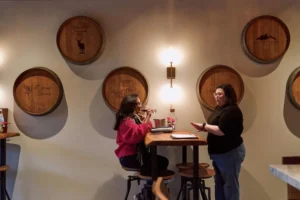
Kelci Wihera, right, speaks with a customer in the Local Vines tasting room in Lafayette. (Don Feria/For the S.F. Chronicle)
Winemaker Pietro Buttitta has a pitch for the new tasting room he opened this week in the East Bay: “It’s Napa but closer, if you live here.”
The Lafayette tasting room, Local Vines, features nine wineries and one cidery from the growing region known as Lamorinda – a portmanteau of Lafayette, Moraga and Orinda. Many residents may not realize that the area surrounding these three municipalities is home to roughly 100 vineyards, with grape varieties ranging from Cabernet Sauvignon to Sangiovese.
As California wine regions go, Lamorinda is nascent. Although wine grapes were grown here as early as the 1880s, it wasn’t until 2005 that it got its first commercial winery. In 2016, it became an American Viticultural Area (AVA), a geographic designation for wine regions regulated by the federal government. All of Lamorinda’s wineries and vineyards are miniscule, many of them literal backyard projects: Those 100 vineyards comprise a total of about 120 acres.
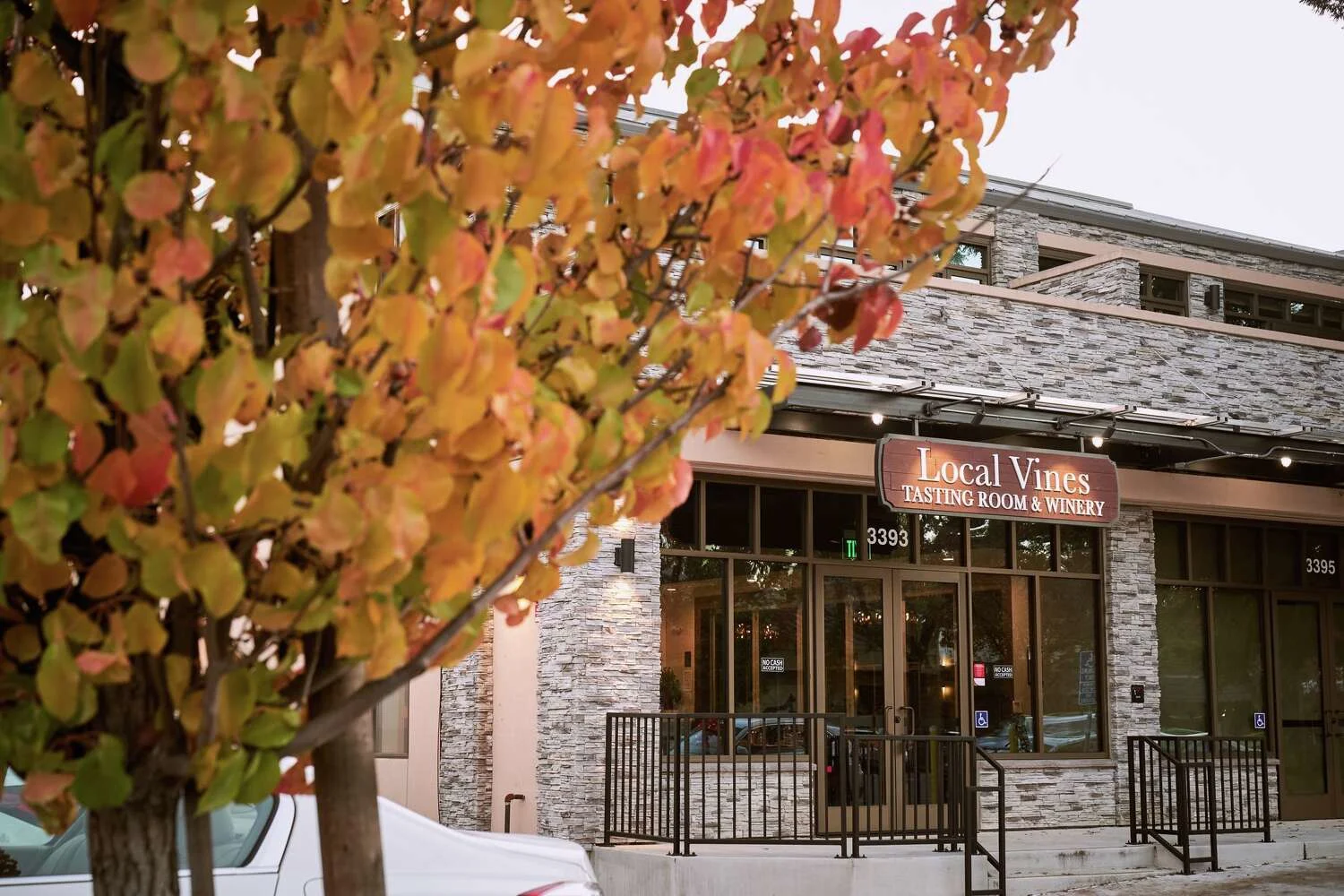
Local Vines is located on Mount Diablo Boulevard in Lafayette. (Don Feria/For the S.F. Chronicle)
The opening of Local Vines, at 3393 Mount Diablo Blvd., Lafayette, marks a major step forward for the Lamorinda AVA, not only in consumer visibility but also in wine quality. In an unusual sort of co-op model, most of the wines poured in the tasting room are also made in the basement cellar. Buttitta, an experienced winemaker best known for his Italian-focused brand Prima Materia, acts as the consulting winemaker for all of those made onsite. These wineries each have their own labels, but Buttitta also siphons some of their juice into Local Vines’ house brand, Stag Hill Vineyards, a representation of the entire AVA.
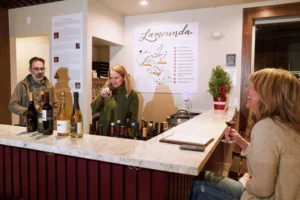
Winemaker Pietro Buttitta, left, looks on as Debbie Harley, center, smells a wine at the Local Vines tasting room in Lafayette. (Don Feria/For the S.F. Chronicle)
“I’m here because I believe in the potential of Lamorinda,” said Buttitta, who has been focusing on Local Vines since shutting down Prima Materia’s Oakland tasting room in March. (He still makes Prima Materia wines, albeit in smaller quantities, sourced largely from his family’s vineyard in Lake County.)
Microclimates within Lamorinda’s five-by-seven-mile expanse vary “wildly,” Buttitta said. The western edges, abutting the Berkeley Hills near Orinda, are the coolest and foggiest stretches, with pockets of volcanic soils; Pinot Noir does well here. Cabernet Sauvignon and other Bordeaux varieties fare well on the eastern side, which borders Walnut Creek to the north and the Livermore wine region to the south. In the middle is Moraga, where fog moves in and out and structured reds like Merlot, Syrah and Sangiovese thrive. On the whole, Buttitta said, Lamorinda is stronger for red wines than whites.
Operating a commercial winery here isn’t easy. Farming costs are high – of the six local vineyard management companies, Buttitta said, none has a tractor – and all of the vines need to be covered in protective netting to prevent birds, skunks, wild turkeys, raccoons and foxes, which run rampant in these residential neighborhoods, from eating the grapes. The area lacks the wine-industry infrastructure found in areas like Napa and Sonoma, which is why the shared Local Vines winery – owned by Larry Thal, of Lafayette’s Thal Vineyards – has been such a game changer.
“There’s definitely a lot of local curiosity,” Buttitta said. During harvest season, when he was crushing the grapes outdoors behind the Local Vines building, he was regularly approached by curious neighbors who expressed interest in trying the local wines.
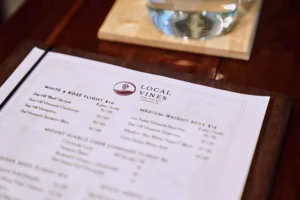
Local Vines features wines and ciders from 10 producers in the Lamorinda AVA. (Don Feria/For the S.F. Chronicle)
Visitors to Local Vines will be able to choose from a range of four-pour flights ($10-$13), including a white wine flight and a “big reds” flight. A cider option ($8) includes four pours from the resident cidery, Mount Diablo Cider Co. At the moment, there’s no food, though Buttitta said the team hopes to add a menu of small bites and to eventually host special dinners.
Thal has installed a board of three wine experts to ensure quality levels at the tasting room: Vlatka Stampar Bathgate, a certified sommelier who has worked at wineries in Napa and her native Croatia; Jenny Fry, manager and wine director of Pasta Moon in Half Moon Bay; and Susan Winchester, director of national accounts for Winebow Imports. The three of them taste through all potential Lamorinda wines and either approve or reject them for the tasting room.
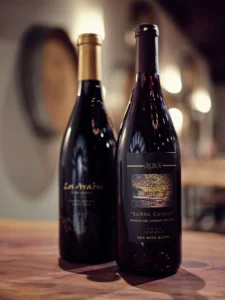
Rancho del Hambre’s SoRho Carolyn red blend. (Don Feria/For the S.F. Chronicle)
So how are the wines? Variable, based on my recent experience. Several Lamorinda reds tasted like dried figs and prunes – in other words, overripe – with alcohol levels exceeding 15%. If the producers were going for big reds, they overshot it. Others were more restrained and pleasant, showing fresh-fruit flavors and firm structure. My favorite was Rancho del Hambre’s 2022 SoRho Carolyn (“SoRho” being an abbreviation of “Southern Rhone”), a blend of Syrah, Grenache, Mourvedre, Cinsault and Carignan. It was juicy and textured, with crunchy strawberry and pomegranate notes and a subtle echo of Mourvedre-inflected funk. At 13.7% alcohol, it was in balance.

Bottles of Mount Diablo Cider Co. (Don Feria/For the S.F. Chronicle)
The Mount Diablo Cider Co. bottlings are also impressive, and a refreshing departure from heavy, structured reds. Its Delta Gold, a Champagne-method cider, has delightfully tiny bubbles and a burst of fresh apple character; a blend of quince and Granniwinkle apples is floral and audaciously tart, sending a jolt across the tongue.
There’s a long way to go before Lamorinda can compete with a place like Napa, acknowledged Buttitta, who has been in his consulting role here since the fall of 2024. (Many of the wines currently being poured at Local Vines are from vintages preceding his arrival.) He’d like to see the growers’ association invest in an even larger, industrial winemaking facility – the downstairs cellar at Local Vines will max out at a mere 2,000 cases – and bring in a marketing team.
“I believe every vineyard deserves a chance,” Buttitta said. And he hopes that Lafayette, Moraga and Orinda residents will rally behind their local wine industry as it evolves. “I think people want to support small businesses. And these are all really small businesses.”
Local Vines. Open 2-7 p.m. Wednesday-Sunday. 3393 Mount Diablo Blvd., Lafayette. 925-298-5109 or local-vines.com
https://www.sfchronicle.com/food/wine/article/lamorinda-local-vines-wine-21197587.php